
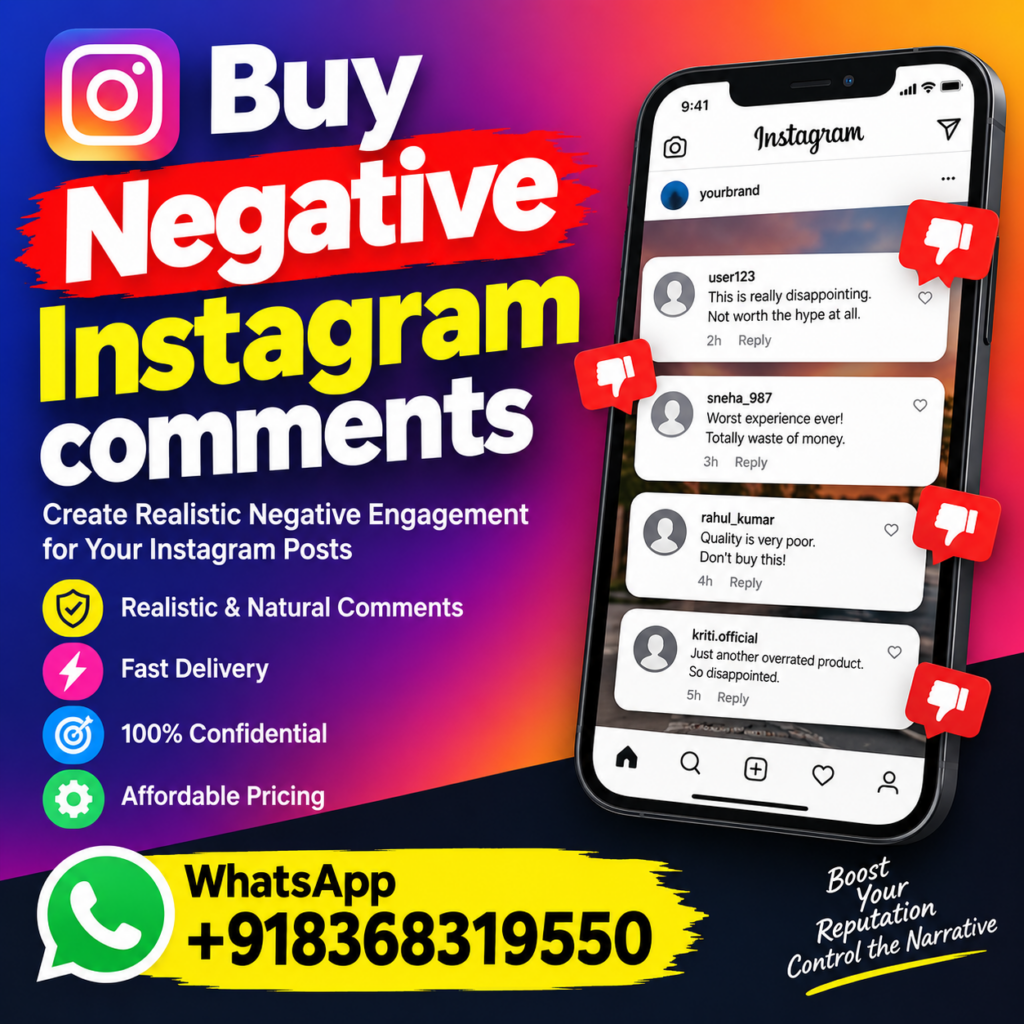
Buy Negative Instagram Comments
The search term “Buy Negative Instagram Comments” is often used by people looking for ways to create visible criticism or simulate negative engagement on an Instagram post. However, artificially generating negative comments can damage a brand’s reputation, violate platform rules, and create misleading impressions for customers. A safer approach is to understand genuine negative feedback and use it as part of a structured reputation-management strategy.
What Are Negative Instagram Comments?
Negative Instagram comments are comments that express dissatisfaction, criticism, disagreement, or a poor experience with a post, product, service, or brand. Genuine negative comments can provide useful information about customer concerns. They may highlight problems with service quality, delivery, pricing, communication, product performance, or customer support.
For businesses, monitoring these comments can help identify recurring issues and improve customer experience.
Why Do People Search for Buy Negative Instagram Comments?
People may search for buy negative Instagram comments for different reasons. Some may want to understand how negative engagement services work, while others may be researching reputation-management techniques or competitor-related risks.
Artificial comments, however, can make an Instagram profile appear less authentic. Large numbers of repetitive or unnatural comments may also reduce audience trust.
Instead of purchasing fabricated criticism, businesses can use genuine customer feedback to identify weaknesses and develop appropriate responses.
How to Handle Negative Instagram Comments
A professional reputation strategy should begin with monitoring. Track comments regularly and identify whether complaints are genuine, abusive, irrelevant, or related to a specific customer-service issue.
Respond professionally to legitimate complaints. A simple acknowledgement followed by an offer to resolve the problem can demonstrate that the business takes customer concerns seriously.
For spam, threats, hate speech, or abusive content, use Instagram’s available moderation and reporting features where appropriate.
Negative Comments and Reputation Management
Negative feedback does not always have to be harmful. When handled correctly, criticism can provide valuable insights into customer expectations. Businesses can analyze recurring complaints, improve their products or services, and communicate solutions publicly.
Reputation management should focus on authentic engagement rather than creating artificial negative activity. Genuine conversations are more useful for understanding an audience and building long-term credibility.
Frequently Asked Questions
Can I buy negative Instagram comments?
Services advertising purchased negative comments may exist, but artificially creating comments can create authenticity and platform-policy risks. Genuine customer feedback is a safer basis for reputation management.
Why do people look for negative Instagram comments?
The keyword may be searched by businesses, marketers, researchers, or individuals investigating reputation-management services and negative engagement.
Are negative Instagram comments useful?
Genuine negative comments can be useful because they may reveal customer concerns and areas where a business can improve.
How should businesses respond to negative comments?
Businesses should remain professional, acknowledge legitimate concerns, provide useful information, and move private customer-service matters to an appropriate support channel when necessary.
Can negative comments affect a brand?
Yes. Repeated genuine complaints can influence how visitors perceive a brand. At the same time, transparent responses and visible problem-solving can demonstrate that the business takes customer feedback seriously.
The phrase Buy Negative Instagram Comments represents a search demand around negative Instagram engagement and reputation management. Rather than relying on fabricated criticism, businesses can benefit more from monitoring authentic feedback, addressing customer concerns, and maintaining transparent communication. A long-term reputation strategy should prioritize genuine engagement, responsible moderation, and continuous improvement.